Witchy Glossary
Whether you’re just starting your path or you’ve been practicing for years, this collection of witchy definitions was made for you. From the meaning of Wicca to types of witches, from ancient spellcraft to modern magic—we’ve got it all, written in plain language with heart and clarity.
And if you’re looking for simple, two-minute spells to deepen your practice, you’ll find handpicked links throughout this guide. Because learning the language of witchcraft is just the beginning… the next step is living it.
Your Witch Glossary
Witchcraft has a lot of language, and some of it can feel overwhelming when you’re starting out. This glossary is here to make things simple. You’ll find clear definitions, real-world examples, and the terms you’ll see most often in spells, books, and everyday practice. Use it as a reference, a study guide, or a quick way to understand something you’ve come across in your craft. Take your time, move through the sections at your own pace, and let the pieces that resonate become part of your path.
A-C
This section covers many of the tools and core ideas you’ll see early in your practice. From altars to candle magic to common spell terms, these are the foundations most witches work with regularly. If you’re building your first setup or learning the language of the craft, start here.
Altar
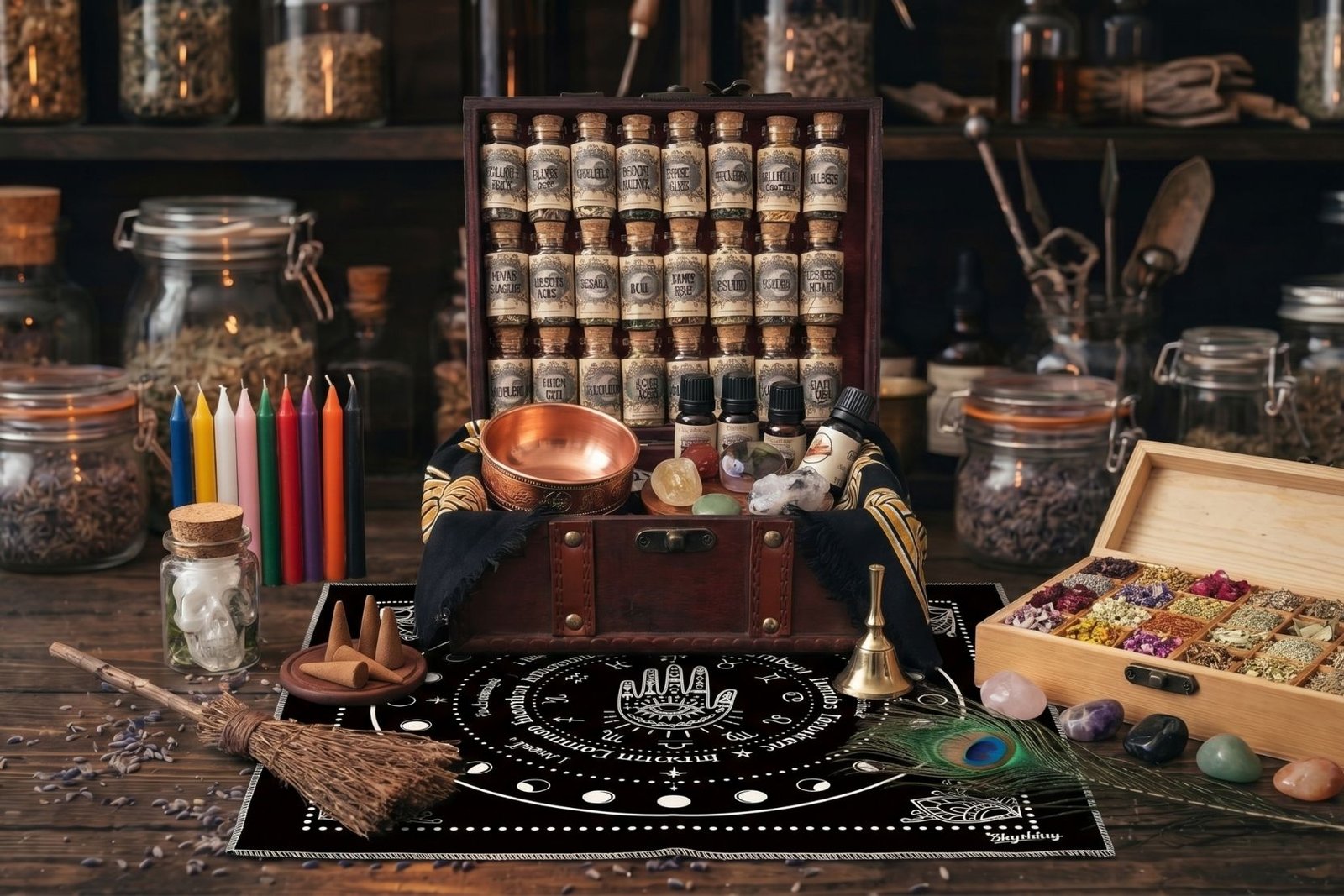
A sacred space where you focus your energy, intentions, and practice. It can be a small shelf, a full table, or even a portable box. Most witches decorate their altar with meaningful tools—candles, crystals, herbs, or ritual statues.
Amulet
An object believed to offer protection, especially when charged with intention. Amulets can be jewelry, stones, or symbolic charms. Unlike talismans, they are often defensive in nature. Browse our hand-blessed amulets in the magical tools section.
Anointing Oil
A consecrated oil blend used to bless, protect, or charge objects, people, or spaces. Typically infused with herbs, resins, or essential oils.
Athame
A ceremonial blade used to direct energy, not to cut physical objects. Often associated with the element of air or fire depending on your tradition. Not required, but helpful for focus in spellwork and circle casting.
Banishing
A magical act to remove unwanted energy, habits, or entities. Can be performed through ritual, smoke cleansing, or specific spells. Many witches use black salt, banishing oil, or herbs like rosemary and rue for this purpose.
Besom
A broom used in spiritual cleansing and ritual—not for sweeping dust, but for sweeping out energy. Witches often hang them near doors or use them to clear space before spellwork.
Binding
A magical act that restricts harm—often used to stop someone (or something) from doing damage. It’s ethical when used to prevent harm, never to control another’s free will.
Book of Shadows
A personal grimoire filled with your spells, experiences, rituals, and lessons. Every witch’s book is unique. Whether digital or handwritten, it’s your sacred magical archive.
Candle Magic
The use of colored candles in spells and rituals. Each color corresponds to an intention—green for abundance, black for protection, etc. Dress your candles with herbs and oils to amplify results. We stock spell candle bundles and oil pairings.
Casting Circle
A ritual boundary that marks sacred space. Circles can be cast with salt, visualization, tools, or sound. They protect your energy and hold power during spellwork. Consider using a crystal grid or bell to aid your circle practice.
Cauldron
A small, fire-safe vessel often used for burning herbs, mixing potions, or as a focal point for transformation magic. It represents the womb, rebirth, and feminine energy. Choose a mini cast-iron cauldron to start with. It fits neatly on most altars.
Chalice
A ritual cup representing the element of water and the divine feminine. Used in ceremonies, especially those related to emotion, healing, and intuition.
Cleansing
The act of removing stagnant or negative energy from a person, object, or space. Methods include smoke cleansing, sound (like bells or singing bowls), water, salt, and visualization.
Correspondences
Symbolic associations—like lavender with peace or the moon with intuition—that help align your magical workings. Many witches use correspondences for herbs, crystals, days of the week, moon phases, and more.
Crystal Grid
An intentional layout of stones used to amplify energy and focus. The arrangement helps direct your intention using sacred geometry.
Ready to put candle magic to work? Light a green candle in our 2-Minute Spell for Career Success and feel the difference intention makes.
D-F
Here you’ll find definitions that explain what witchcraft is, how it has been shaped over time, and the practices that support it. These entries help you understand the bigger picture—traditions, history, and the concepts that give structure to modern magic.
Define White Witch
A white witch typically refers to someone who practices magic with healing or protective intent. They may focus on lightwork, herbalism, or angelic guidance. But remember, magic isn’t black or white—it’s all about intention.
Define Witch
A witch is someone who listens to nature, trusts intuition, and works intentionally with energy. Not all witches use spells or potions—some express their craft through journaling, candle lighting, or mindful cooking.
Define Witchcraft
To define witchcraft is to understand it as the practice of magical arts for healing, empowerment, and connection. It’s a sacred way of living and working with natural energies—personal, intuitive, and often spiritual.
Define Witch Hunt
Historically, a witch hunt was a violent campaign against accused witches, often targeting women and marginalized people. Today, the phrase also describes unjust persecution or scapegoating.
Definition for Witchcraft
Witchcraft is a magical practice grounded in personal power, nature’s cycles, and symbolic tools. It’s often spiritual, but not always religious. This definition has evolved, shaped by culture, experience, and choice.
Definition of a White Witch
A white witch is someone whose craft centers around kindness, clarity, and protection. They may work with love spells, energy cleansing, or healing rituals. Many use crystals, white candles, and soft herbs in their practice.
Deity
A divine being or archetype honored in your craft. Witches may work with gods, goddesses, ancestors, or nature spirits. This relationship is deeply personal and evolves over time. Altar statues and offerings help create a space of reverence.
Different Forms of Witchcraft
Witchcraft takes many forms—some are structured and ceremonial, others are intuitive and freeform. From Wicca to chaos magic, folk traditions to solitary practices, your path is yours to choose.
Different Types of Witchcraft 💧
Witchcraft includes dozens of practices like candle magic, sea magic, sigil crafting, and divination. Each has its own rhythm and flavor. Follow what lights you up.
Different Types of Witches
From cosmic witches to cottage witches, the spectrum of witchcraft is wide and beautiful. You don’t have to pick just one—you can follow your intuition and combine what calls to you.
Divination
The practice of seeking guidance or insight through symbols—like tarot, runes, pendulums, or scrying. It’s not about fortune-telling; it’s about clarity.
Drawing Down the Moon
A ritual where a witch invokes lunar energy into themselves or an object. Often practiced during full moons for wisdom, intuition, or power.
Elemental Magic
Working with the energies of earth, air, fire, water, and spirit. Each element has specific traits and tools. You might feel especially drawn to one, or balance them all. Start with our elemental altar bundles for each energy.
Esbat
A celebration of the full moon, often focused on intuitive or inward magic. Many witches perform divination, charging, or intention-setting during Esbats.
Familiar
A spiritual ally—often in animal form—who helps you in your magical practice. Familiars aren’t pets, though they can be. They are energetic partners.
Five Elements
Earth 🌱, Air 🌬️, Fire 🔥, Water 💧, and Spirit 🌟—the building blocks of most magical systems. Each element represents specific energies you can work with for balance and power.
Full Moon
A time of heightened energy, perfect for manifestation, releasing, and ritual work. The full moon shines a spotlight on what’s been growing and asks you to harvest the lessons.
Lunar energy isn’t only for ritual nights. Our 2-Minute Spell for Lucid Dreaming harnesses the moon’s quiet power to deepen your dream practice — no full moon required.
G-J
This section explores practices that deepen your daily work, like grounding, journaling in your grimoire, and understanding elemental influences. These terms support practical magic and help you stay steady as you build your personal rhythm in the craft.
Grimoire
A personal book of spells, rituals, correspondences, and magical discoveries. Think of it as your witchcraft journal or sacred workbook.
Grounding
A practice that helps you reconnect with your body, the Earth, and the present moment—especially after energy work or ritual. Techniques include breathwork, walking barefoot, or using grounding stones.
Handfasting
A sacred union ceremony in which hands are bound with ribbon or cord to symbolize commitment. It’s often used in Wiccan or pagan weddings.
Herb Magic
Using the natural energy of herbs in spells, teas, incense, and rituals. Each plant has its own magical properties—lavender for peace, basil for prosperity, rosemary for memory.
High Priestess / High Priest
A respected spiritual leader or teacher within some traditions of witchcraft or Wicca. They may guide rituals, initiations, and group practices.
Imbolc
A cross-quarter sabbat celebrated around February 1–2, honoring the return of light and the first signs of spring. Often associated with Brigid, candles, and purification.
Incantation
A spoken spell or chant used to focus energy and intention. The power is in the words and the way you say them—with belief, rhythm, and purpose.
Intention
The heart of all magic. It’s the clear focus and purpose behind every spell, ritual, or action. Without intention, magic is just motion.
Invocation
Calling in a spirit, deity, or energy to be present in ritual. This can be done through spoken word, gesture, or simply heart-centered intention. Often paired with candle work or circle casting to create a protected space.
Intention is the heart of every spell. Try it for yourself with our 2-Minute Spell to Enhance Creativity — a quick ritual to unblock inspiration and let ideas flow.
K-M
Here you’ll find words connected to seasonal rituals, daily kitchen magic, moon work, and the tools witches use to direct energy. These entries help you connect your practice to cycles of nature and the small rituals woven into everyday life.
Kitchen Witch
A witch who weaves magic into daily life—especially through cooking, herbs, and hearth rituals. Stirring intentions into soup or charging spices with purpose is part of this hands-on path.
Labyrinth
A meditative, spiral-like path used for reflection or spiritual journeying. Unlike a maze, it has one path in and out—no wrong turns, just inward focus. Some witches walk physical labyrinths, others trace finger ones.
Litha
The summer solstice celebration in the Wheel of the Year. A festival of fire, strength, and solar blessings. Witches may honor the sun with fire rituals, floral crowns, and offerings of abundance.
Magic Circle
A protective and intentional energetic boundary cast before spellwork or ritual. Circles can be drawn physically with salt or chalk, or visualized energetically.
Meaning of Wiccan 🧘♀️
Wiccan is both a belief system and magical tradition. It emphasizes harmony with nature, ethical magic (often guided by the Wiccan Rede), and sacred balance. Many modern witches draw from Wicca in part or in full.
Moon Water
Water charged under the light of the moon and used for cleansing, spells, or intention work. Full moon water is popular for amplifying, while dark moon water is more about release.
Some moments ask for bravery, not big rituals. Step into your power with our 2-Minute Spell to Spark Courage — a quick spell for when fear is getting in the way.
N-R
This section includes terms that strengthen your spellcraft—numerology, oaths, pentacles, runes, ritual baths, and more. These are the pieces that help you shape intention, prepare for ritual, and understand how energy moves in different forms of magic.
Numerology
The study of numbers and their symbolic meaning. In witchcraft, it’s often used to analyze life paths, timing for spells, or personal vibrations.
Meaning of Wiccan 🧘♀️
Wiccan is both a belief system and magical tradition. It emphasizes harmony with nature, ethical magic (often guided by the Wiccan Rede), and sacred balance. Many modern witches draw from Wicca in part or in full.
Oath
A magical promise, usually made to oneself, a deity, or the universe. Oaths are sacred commitments in the craft—spoken or written, and taken seriously.
Ostara
A spring equinox sabbat celebrating renewal, balance, and fertility. Symbolized by eggs, seeds, and flowers, it’s a time of planting intentions and waking up the earth.
Pentacle
A five-pointed star enclosed in a circle, symbolizing protection, balance, and the five elements. Often worn as jewelry or placed on altars to ground energy.
Ritual Bath
A spiritual cleanse done with herbs, salts, or oils before spellwork or on sacred days. Helps release stagnant energy and align your body and spirit. It’s less about hygiene, more about intention.
Rune
An ancient alphabet often used in divination and spellcraft. Each symbol holds energy and meaning—perfect for casting, drawing, or carrying as talismans.
Love can lose its spark — but it can be rekindled. Try our 2-Minute Spell to Rekindle Love, designed to soften routine and bring connection back into a relationship.
S-U
In this part of the glossary, you’ll find words tied to seasonal celebrations, shadow work, divination, spirits, and spellcraft. These entries explain both the inner work and the outward rituals that many witches use to grow, reflect, and stay aligned.
Sabbat
One of the eight seasonal festivals on the Wheel of the Year. These celebrations align with the solstices, equinoxes, and cross-quarter days—honoring nature’s turning cycles.
Sacred Space
A physical or energetic place set apart for spiritual work. It might be a corner of your room or the entire forest. What matters is your respect and consistency.
Scrying
A form of divination using reflective surfaces—mirrors, water, crystal balls. Witches gaze, soften the eyes, and allow symbols or impressions to emerge.
Shadow Work
The process of exploring hidden, suppressed, or painful parts of yourself. It’s not negative—it’s necessary for healing and integration. Journaling, meditation, and ritual help guide the way.
Sigil
A symbol created from your intention, designed to hold magical energy. Drawn, carved, or visualized—once charged, it becomes a tool for manifesting.
Skyclad
Practicing magic in the nude, typically during ritual, to honor vulnerability, truth, and the sacred self. Not required—but for some, it’s powerful and liberating.
Smudging
A sacred smoke cleansing practice rooted in Indigenous traditions. Many witches choose smoke cleansing with ethically sourced herbs like rosemary or lavender to honor cultural boundaries.
Solitary Witch
A witch who practices alone, often designing their own rituals, beliefs, and path. Solitary doesn’t mean isolated—it means self-led and intuitive.
Spell Jar
A small container filled with herbs, crystals, symbols, and intentions—sealed to manifest a goal like protection, abundance, or love. Each ingredient carries energy, and the jar becomes a concentrated beacon of your wish.
Spirit Guide
An unseen ally that offers wisdom and support. They may appear in dreams, meditation, or ritual. Many witches connect with guides through divination or trance.
Spirit Work
Connecting with spirits—ancestors, guides, or other entities—for insight, healing, or partnership. This work requires grounding, consent, and protection.
Talisman
An object charged with energy to attract something specific, like confidence, luck, or creativity. Unlike amulets, which protect, talismans invite.
Tarot
A symbolic card deck used for self-reflection, insight, and clarity. Tarot isn’t about predicting doom—it’s about understanding your story and your choices.
Thirteen Moons
A traditional year in many witchcraft practices, marking thirteen full moons. Each moon offers a different energy and magical focus, from beginnings to release.
Threefold Law
The belief that what you put into the world—positive or not—returns to you threefold. It’s a reminder to act with integrity and intention.
Types of Witchcraft 🌕
There are many different witch types and paths within witchcraft—like green witchcraft, hedge witchery, sea magic, and elemental work. Each focuses on different energies, tools, and intentions. It’s okay to blend paths or change over time.
Types of Witches 🕯️
There’s no single type of witch. Some focus on divination, others on herbs, ancestors, or the elements. You might be a hearth witch, a storm witch, or something uniquely your own.
A ritual bath releases the heavy, the stuck, the stale. Pair it with our 2-Minute Spell for Energetic Reset for a complete cleanse when your energy feels off.
V-Z
This final section covers the tools, symbols, and traditions that support long-term practice—from wands and wards to the Wheel of the Year and the meaning of being a witch. These definitions help you see how the craft expands over a lifetime and how each piece fits into the larger path.
Wand
A magical tool used to direct energy, especially in spellwork or ritual. Wands are made from wood, crystal, or metal and often correspond to intention or element.
Ward
A protective barrier, energetic or physical, set to keep out unwanted influences. Wards can be objects, boundaries, or spells.
Wheel of the Year
A sacred calendar marking eight sabbats, or seasonal festivals. It reflects the cycle of life, death, and rebirth.
Wiccan Meaning 🌿
Wiccan refers to a specific spiritual path within witchcraft. Most Wiccans follow a nature-based religion that honors the God and Goddess and the Wheel of the Year. Ritual tools and seasonal altars are often used.
Witch
A witch is someone who works with energy—natural, spiritual, or symbolic—to create change, healing, or understanding. Witches might use spells, crystals, herbs, rituals, or intuition to align with the cycles of nature and their own inner wisdom. Being a witch isn’t about a costume or a label—it’s about awareness, intention, and sacred action.
🧙♀️ Related: Explore bestselling starter sets in our shop.
Witch Bottle
An old form of protective magic. Traditionally filled with sharp items, herbs, or bodily traces, sealed, and buried or hidden. Modern witch bottles serve both protection and spellwork.
Witch Hazel
A flowering plant long used in both medicine and magic. Spiritually, it’s valued for purification, protection, and soothing energy. It’s also common in skin care.
Witch Hunt
Originally referring to violent persecution of alleged witches, it now also describes unjust targeting of individuals or groups. Understanding this term is key to reclaiming the word witch. Our books explore the history and modern reclamation of witchcraft.
📚 Want to learn more? Explore our historical guides on witchcraft’s past.
Witch Mark
A physical mark believed (historically) to identify a witch—often a mole, scar, or birthmark. Today, many witches reclaim these marks as signs of power or ancestral memory.
Witchcraft
The practice of intentional, spiritual, and magical work. It may include rituals, spellwork, divination, herbalism, and energy work. Witchcraft is as diverse as its practitioners.
Witchcraft Meaning
While often misunderstood, witchcraft simply means the art and practice of harnessing energy to bring about change. It’s a path of alignment, not evil. Our beginner kits demystify the basics with gentle guidance.
📦 Just starting out? Check out our witchcraft starter kits designed for clarity and ease.
Witchy
A vibe, an aesthetic, and often a lifestyle. Being “witchy” can include dressing with intention, loving the moon, using herbs, or just following your intuition.
Witchy Meaning 🌘
“Witchy” describes anything with magical, mystical, or spiritual vibes. It’s a feeling, an aesthetic, and a nod to personal power. From altar tools to intention journals, witchy is both vibe and practice.
Wicca
A modern religion rooted in earth-based spirituality, honoring both divine feminine and masculine forces. Wicca includes ritual, sabbats, and a strong ethical code.
Wiccan
A person who practices Wicca. Wiccans may celebrate the sabbats, follow the Wiccan Rede, and work magic within that spiritual framework.
Widdershins
Moving counterclockwise in ritual, often used for banishing, releasing, or unbinding. It contrasts with deosil (clockwise), which builds or draws in energy.
Yule
The Winter Solstice sabbat, celebrating rebirth, light returning, and inner reflection. Many traditions honor ancestors, share meals, and decorate evergreens.
Zodiac Practice based on the twelve zodiac signs. You might craft spells during your sun season or align rituals with astrological transits.
The Wheel of the Year reminds us that every cycle has an ending. Honor yours with our 2-Minute Spell for Letting Go — a gentle ritual for releasing what no longer belongs in your life.
Save this Witch Glossary for Easy Reference
Whether you’re new to the craft or deepening your path, learning the language of witchcraft helps you work with more intention, clarity, and confidence. This witch glossary is just the beginning—a spark to ignite your practice.
✨ Want more like this?
Subscribe to get free grimoire pages, moon calendars, ritual guides, and magical tools delivered to your inbox every month. Your craft deserves support—and your inbox deserves spells that actually inspire.